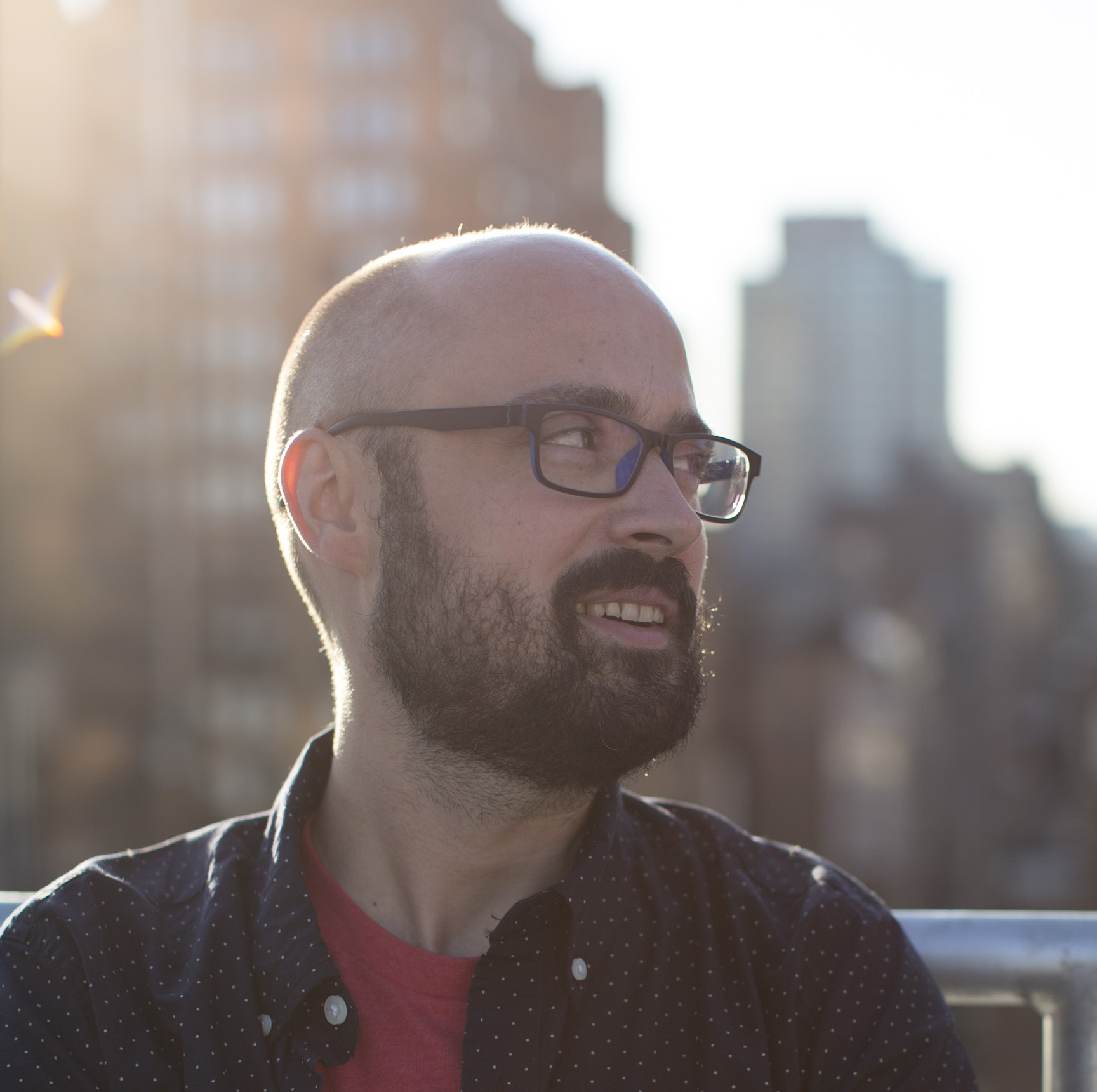
Robert Walter, Ph.D.
Research Engineer and HCI Researcher
I am research engineer in Advanced Driver Assistance Systems and researcher in Human-Computer Interaction. After my Ph.D. on Whole Body Interaction with Public Displays at Quality and Usability Lab of Telekom Innovation Laboratories and Berlin Institute of Technology, I joined the Technology and Innovation group at Siemens Mobility.
Projects
-
RealSynth
,
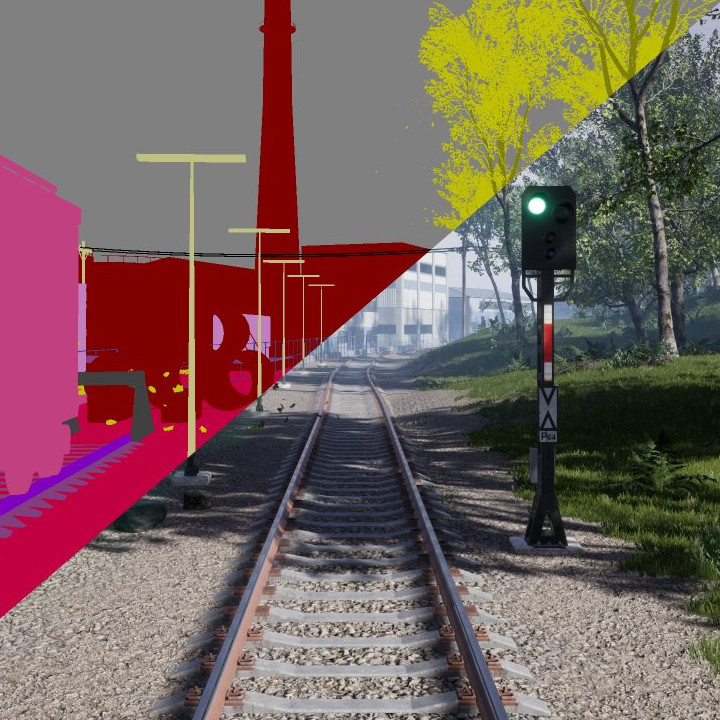
Together with Richard Schubert, we provide fully custom synthetic annotated image data using the latest rendering technologies. Taking this as a first step, our ultimate goal is to minimize the need of field tests as much as possible. We envision a fully simulated and controlled environment where developers can both train and test-bench AI-based systems for railway.
-
MyPosition
,
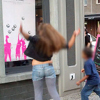
The project with Nina Valkanova allows for a great and novel way of urban participation: passers-by get the opportunity to place a vote on local topics by performing body gestures in front of a large public display installation.
-
StrikeAPose
,
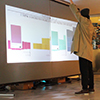
We investigate how to reveal an initial mid-air gesture on interactive public displays. This initial gesture can serve as gesture registration for advanced operations.
-
LookingGlass
,
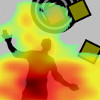
In this project with Jörg Müller we investigated how passers-by notice the interactivity of public displays. We designed an interactive installation that uses visual feedback to the incidental movements of passers-by to communicate its interactivity.
-
Kinect Finger Counting
,
In this project with Gilles Bailly we present the adaptation of three menu techniques for free hand interaction: Linear menu, Marking menu and FingerCount menu.
Publications Extract
[/two_thirds_last] [one_third]
[/two_thirds_last] [one_third]
[/two_thirds_last] [one_third]
[/two_thirds_last] [one_third]

[/two_thirds_last] [one_third]

[/two_thirds_last] [one_third]
[/two_thirds_last] [one_third]
[/two_thirds_last] [one_third]
[/two_thirds_last] [one_third]
[/two_thirds_last] [one_third]

[/two_thirds_last]
Generated using pubgen.py | publications.json
Blog
In the framework of InnoTrans 2016, the world’s largest trade fair focused on the rail transport industry, we presented some of our recent work at Siemens on the “Digital Train” exhibit.
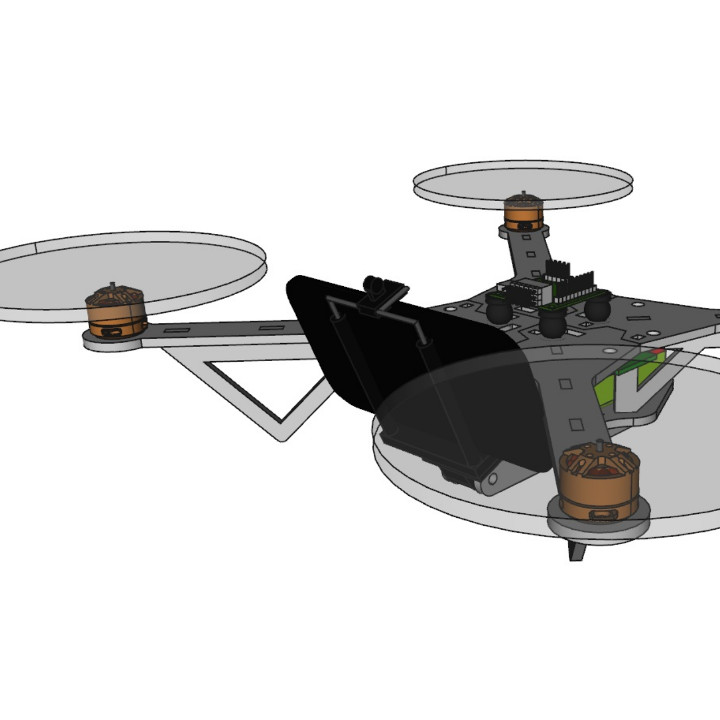
The motivation for this project was to build a minimalist quadcopter platform to carry a smartphone up in the air. The smartphone can not just capture videos of the flight, but could also be connected to the flight controller and[…]
Together with David Lindlbauer, Klemen Lilija and Jörg Müller, we received an Honorable Mention Award at CHI ’16 for our paper Influence of Display Transparency on Background Awareness and Task Performance. Awesome work, everybody!
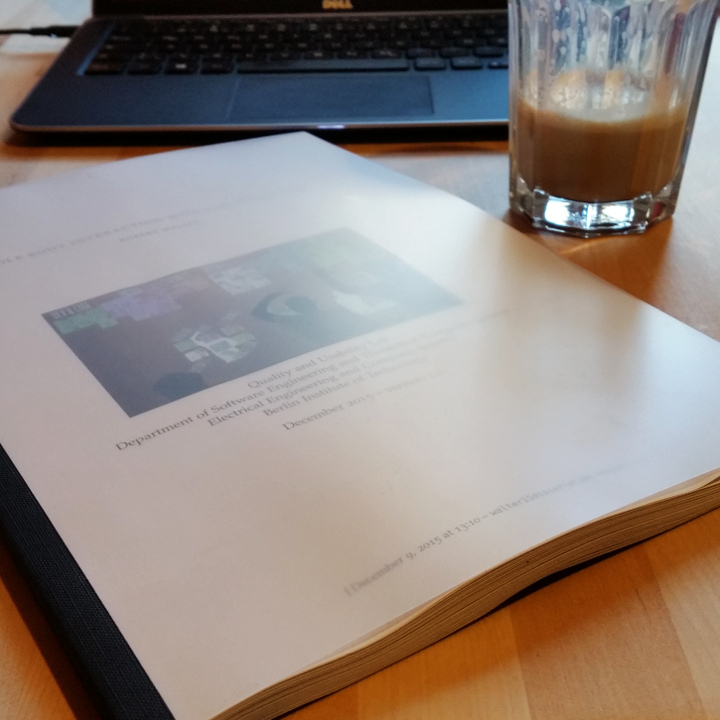
After a little more than four years of working and publishing on my topic, I submitted my PhD thesis on Whole Body Interaction with Public Displays today!
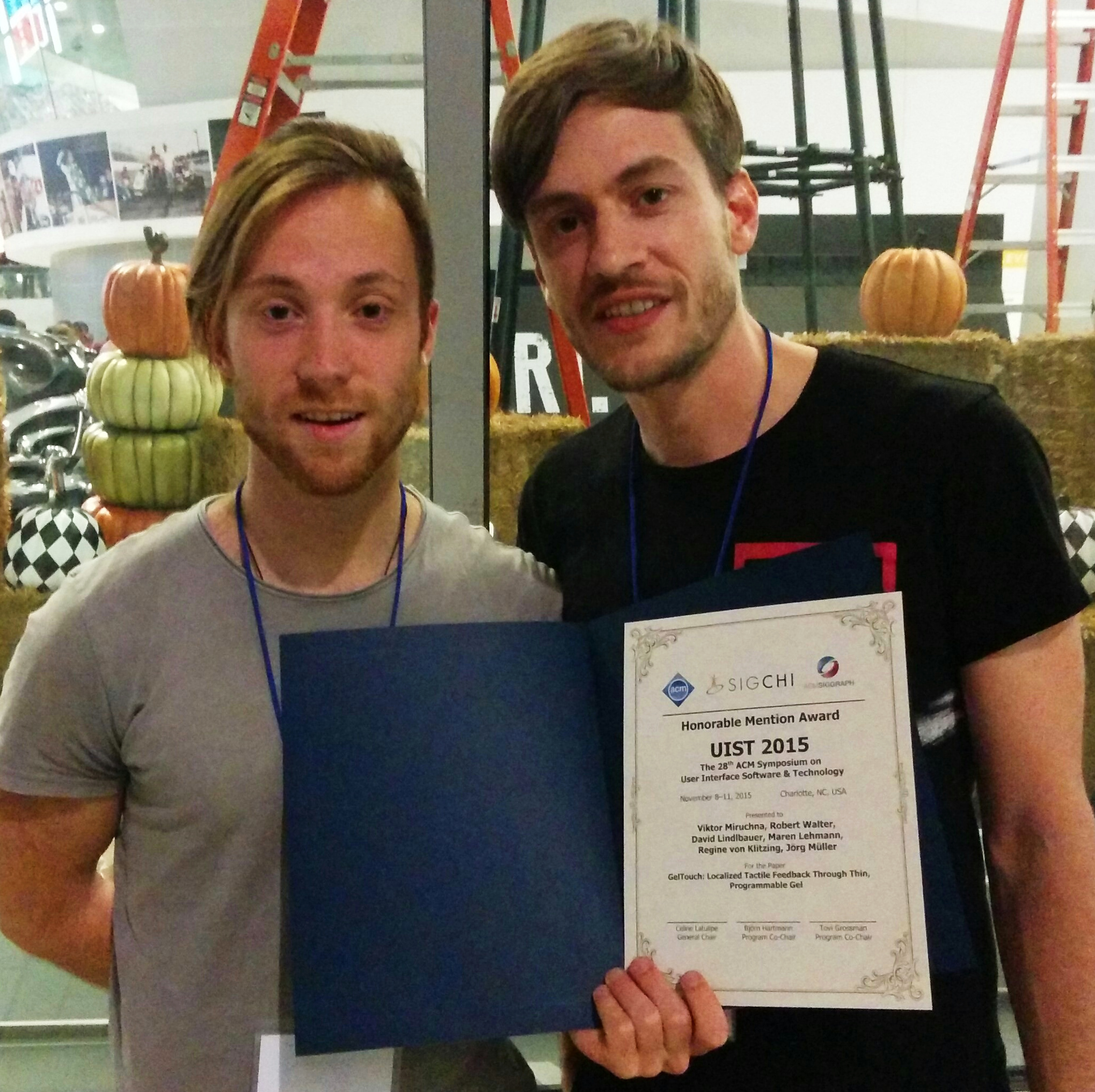
Together with Viktor Miruchna, David Lindlbauer, Jörg Müller, Maren Lehmann and Regine von Klitzing, we received an Honorable Mention Award at UIST ’15 for our paper GelTouch: Localized Tactile Feedback Through Thin, Programmable Gel. Congratulations, you guys!
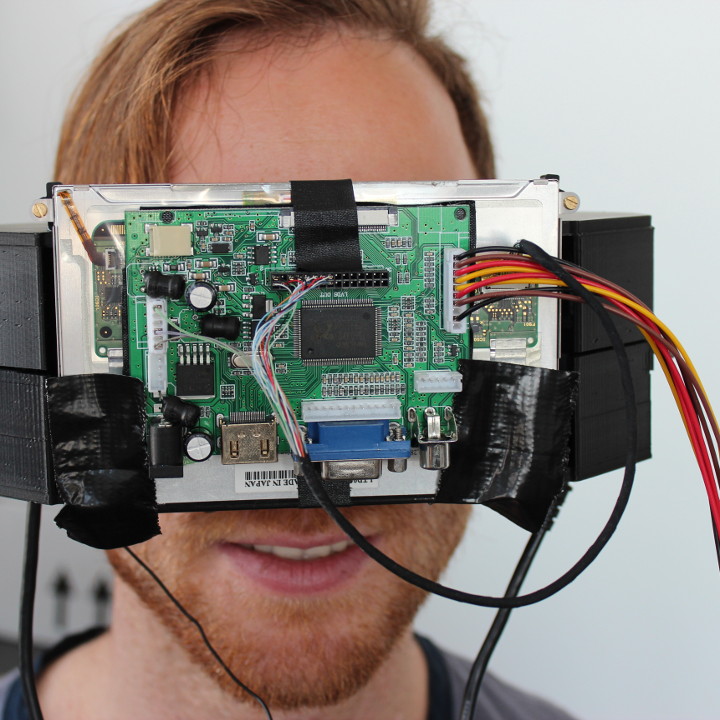
Current Augmented Reality headsets and (Head-mounted displays) HMDs like the Microsoft HoloLens and Meta 2 are still very expensive and inaccessible. Together with Marc and Michelle, we present a simple approach to allow everyone who owns a mobile phone to[…]
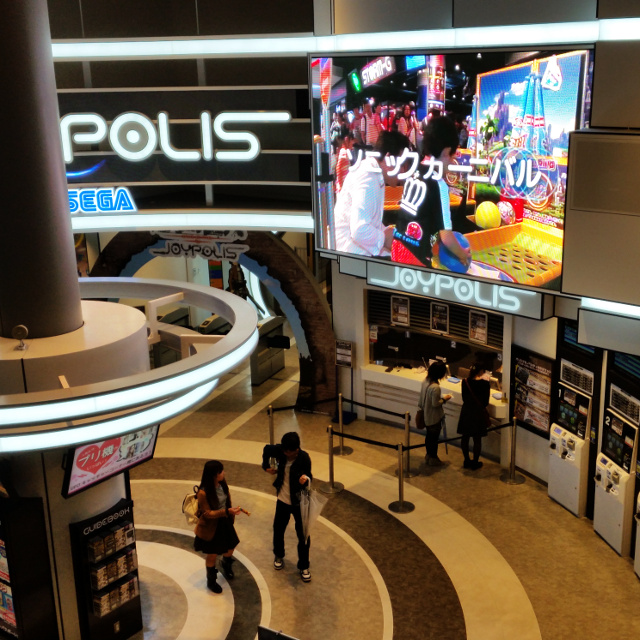
Today, I had a really awesome time with the guys from SEGA R&D! First stop was Tokyo Joypolis, which is an amazing place! It exhibits the latest and most crazy arcade creations of SEGA. Everything there is fun and interactive[…]
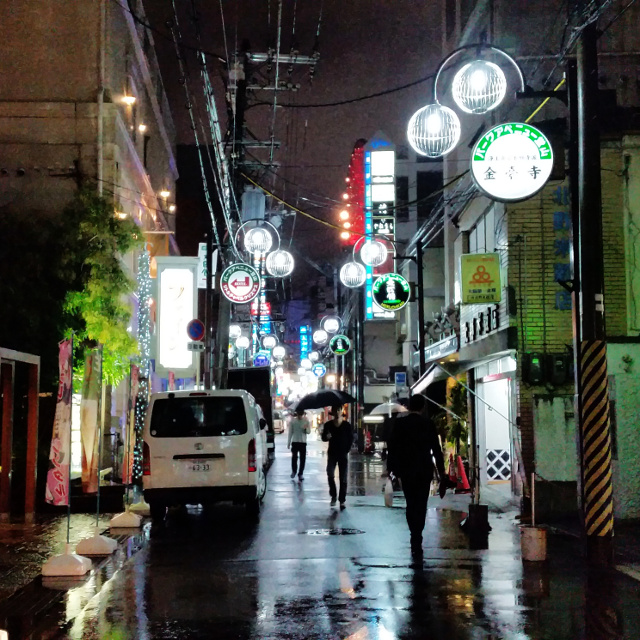
I presented our note Analyzing Visual Attention During Whole Body Interaction with Public Displays at UbiComp today in the Public Displays session. I had a really hard time to concentrate during the talk, since we went to Karaoke until 4:00[…]
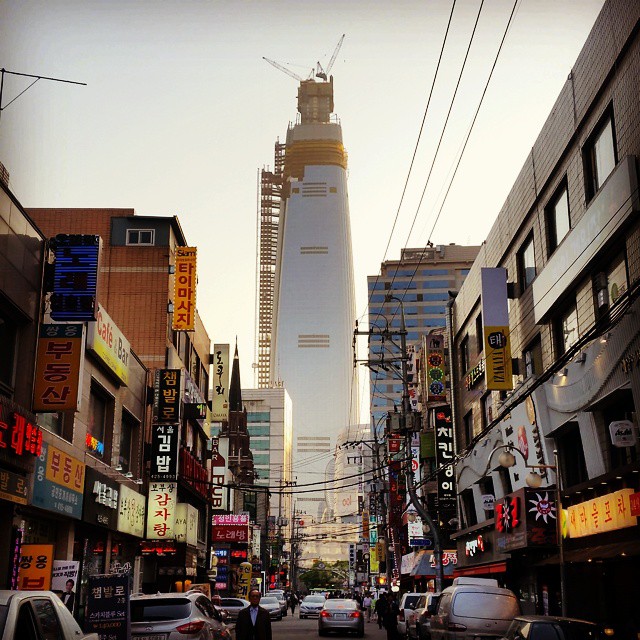
Today, I attended the Doctoral Consortium at CHI’15 in Seoul. It was a great opportunity to get feedback on my thesis work from important HCI people.
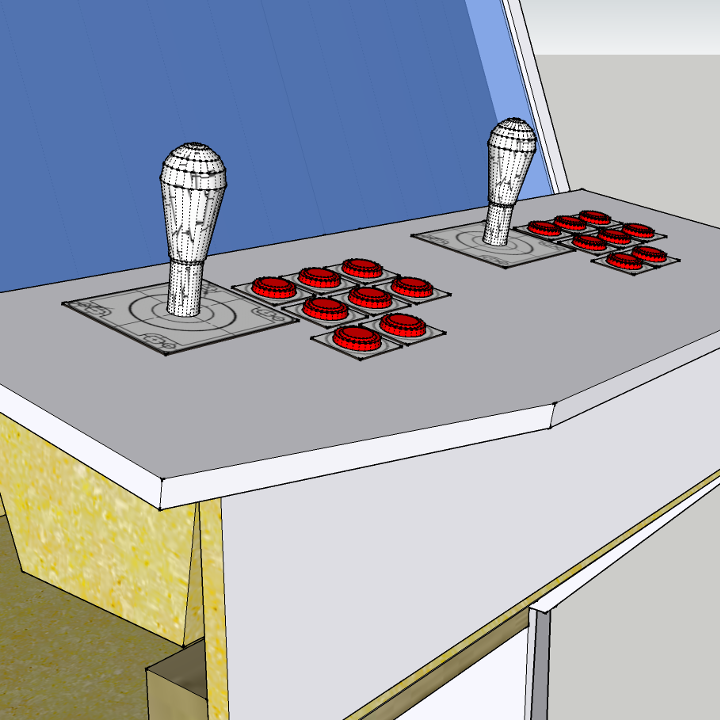
Since I have a passion for retro-gaming, I decided to build my own arcade cabinet! It’s based on RetroPi. the SketchUp model file can be found here. DIY Arcade Cabinet
Teaching
During my time at T-Labs, I conducted the exercises and the projects of the Mobile and Physical Interaction module (2011 to 2014) and the Multimodal Interaction course (2015) of Quality and Usability Lab of TU Berlin. Each year, 50 to 70 students attended our lectures. Besides, I supervised a series of master theses in Human-Computer Interaction.
Supervised Theses
Klemen Lilija. 2015 Interaction with Transparent Displays
Viktor Miruchna. 2015 Exploring the Potential Usage of Hydrogels for Tactile Feedback Systems
Tiare Feuchtner. 2014 Interruptions in Interaction with Public Displays
Thor Bossuyt, Niklas Hillgren. 2012 Combining Touch and Gestural Interaction on Public Displays
Mobile and Physical Interaction Student Projects
Within 7 weeks, students go from brainstorming ideas and defining personas of the target audience, over storyboard, conducting interviews with potential users, paper prototyping, to the first iteration of a software prototype. The prototype is then redefined using methods of heuristic evaluation and a think-aloud user study. Students document the progress of their work in a project blog and submit a video demonstrating the design process and interaction with their prototypes. The following montage shows example projects of one semester.
In the exercise, students learn the basics of the famous creative coding environment Processing and get introduced to natural user interaction using the Kinect Camera and the OpenNI framework. Using these tools, students practically apply the interaction design process taught in the lecture and create small projects in groups. The task is to create an intuitive yet engaging interactive public display application.
The following projects on the topic Interactive Waiting Area Experience are examples of great projects. Note that the projects displayed here are not my work but the result of student projects of our HCI course!
[one_third] [service title=”Drunken Ed” icon=”http://img.youtube.com/vi/eciPDPR2kWk/0.jpg”] You play a drunkard: shift your body and try not to tumble! The students later released an Android version of their prototype.[button size=”middle” title=”Video” style=”oval” url=”https://www.youtube.com/watch?v=eciPDPR2kWk” scroll=”0″ target=”_blank”] [/service] [/one_third] [one_third] [service title=”GO” icon=”http://img.youtube.com/vi/YQoZ7FLHZJk/0.jpg”] A Southpark-themed racing game that you control by bending your body. You can also throw snow balls!
[button size=”middle” title=”Video” style=”oval” url=”https://www.youtube.com/watch?v=YQoZ7FLHZJk” scroll=”0″ target=”_blank”] [/service] [/one_third] [one_third_last] [service title=”Bazinga” icon=”http://img.youtube.com/vi/dSMQn7tsNbA/0.jpg”] Players have to place specific body parts on predefined, moving targets on a circle around their body.
[button size=”middle” title=”Video” style=”oval” url=”https://www.youtube.com/watch?v=dSMQn7tsNbA” scroll=”0″ target=”_blank”] [/service] [/one_third_last] [separator size=”wide” style=”normal”]
Fore the sake of completeness, here’s a full list of all student projects blogs of our courses. Note that some links might be dead by now and again that this is not my work but the result of student projects that are credited in the corresponding blogs:
Mobile and Physical Interaction Winter 2013/2014
re:aktion KiMap ClimbOrDie Cool Playlist Editor C.R.I.M.E King Kong Journey SoundRocket Fashion App BubbleWars SonicBoom BeeDance
Mobile and Physical Interaction Winter 2012/2013
Moove Whack-a-Mole Drunken Ed GO gamewall 1,2,oder 3 Locatify Virtual Bongo Band Interactive Schedule MoveTheBeat TowerNinja gempitcher MultiGestures ISAG Memory Game
Mobile and Physical Interaction Winter 2011/2012
Bazinga! Terminaltainment ScaMPIs mpiinpublic Air BEnd PimpMyWall VolleyBall Public Display Interaction Waiting Area Experience Displaid LOGICO Mobile Interaction Project Enjoyinteraction
Multimodal Interaction Summer 2015
re:aktion Cooking Aid VeloTalk 1,2,oder 3 Drag and Destroy Virtual Media Library Multimodal File Browser SuperPowerPoint
Contact Me
Telekom Innovation Laboratories
Ernst-Reuter-Platz 7
10587 Berlin
Germany